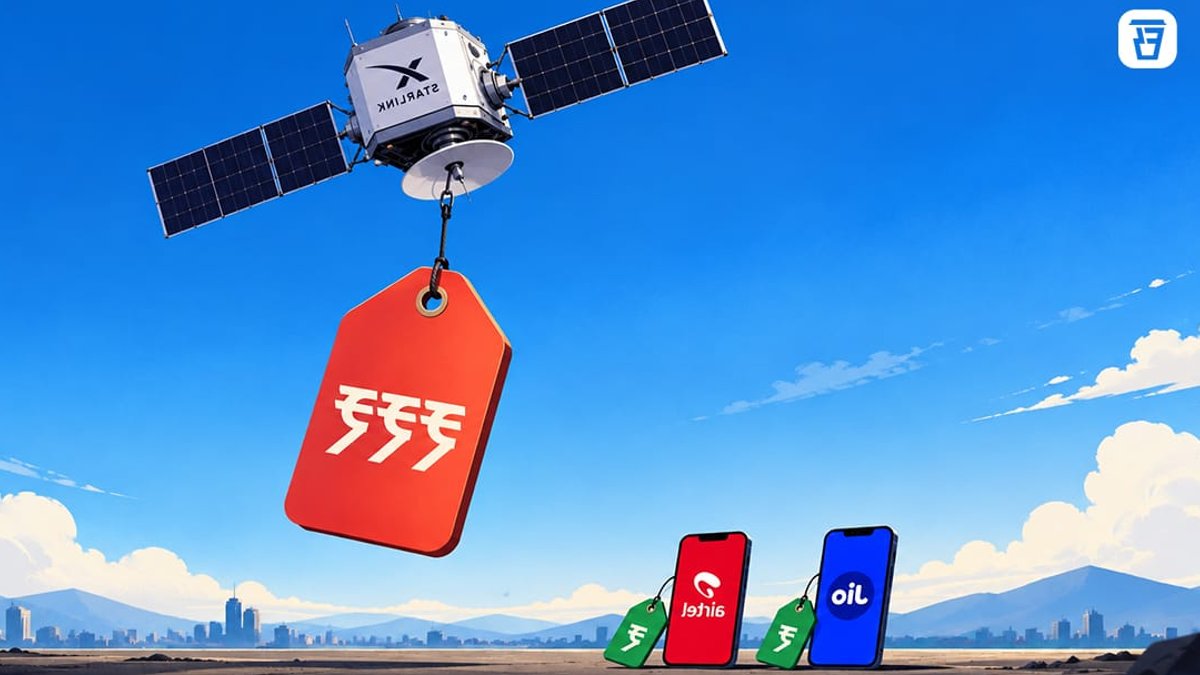
Starlink faces significant hurdles in entering India’s competitive internet market, where domestic providers have established dominance at low prices. The satellite internet operator, led by Elon Musk, aims to launch services in a country where mobile data costs are among the cheapest globally, raising questions about its ability to compete effectively.
Starlink has signed agreements with major Indian telecom companies Jio and Airtel to facilitate its entry, but it also intends to operate independently. However, the company must first secure government licenses, regulatory clearances, and spectrum allocation before launching commercial services. While Starlink, Jio Satellite Communications, and OneWeb India have obtained necessary licenses, approvals remain pending for others.
Pricing Challenges in a Cost-Sensitive Market
Musk has promised that Starlink’s service will be “affordable,” but the company has not disclosed official pricing for India. To gauge potential costs, the service’s pricing in Bangladesh offers insight. A Starlink connection there costs approximately ₹3,295 monthly for speeds around 200 Mbps, with an upfront hardware fee of ₹20,800. This translates to a first-year expense of about ₹60,000, which is 2 to 4 times higher than similar broadband plans from Jio and Airtel that do not require upfront hardware investments.
In India’s price-sensitive market, such pricing could deter customers who already have access to affordable broadband. Additionally, the country may face oversupply of satellite internet capacity, as research firm Analysys Mason projects demand growing from 44 Gbps in 2023 to over 3 Tbps by 2032. However, proposed capacity from operators like Starlink, Jio, and OneWeb could exceed this demand, potentially forcing price cuts and market exits.
Read Also: IRDAI Proposes Insurance Reforms, Tackles Mis-Selling in India
Competing with Established Players
Jio and Airtel’s existing infrastructure provides a major advantage. These companies have invested heavily in fiber-optic networks, particularly in urban areas, enabling low-cost, high-speed internet with generous data allowances. They also bundle entertainment subscriptions and digital services, making their offerings more attractive. Starlink, by contrast, will struggle to match this value proposition initially due to limited network capacity shared among users in coverage areas.
The government has capped Starlink’s customer base at 20 lakh (2 million) users, citing network capacity constraints. This limit prevents indefinite customer growth without compromising service quality. Starlink’s best opportunity lies in rural, remote, or border areas where fiber infrastructure is lacking, or in backup services for businesses and government entities.
In Bangladesh, Starlink had 1,862 customers four months post-launch, growing to 5,389 by mid-2026, primarily corporate users relying on it as a backup. While this small customer base limits revenue, capturing even 1% of India’s broadband market could yield $1 billion annually, according to The Washington Post, especially if targeting businesses willing to pay premium rates for reliable connectivity.
Political Undercurrents and Regulatory Hurdles
Elon Musk has publicly criticized the Indian government’s handling of Starlink’s approval process, accusing officials of favoring domestic corporations like Reliance Industries. His comments reflect broader tensions between the satellite internet provider and Indian policymakers. Musk has repeatedly claimed that “oligarchs” are using influence to block Starlink’s entry, though the government has not directly addressed these allegations. The dispute adds uncertainty to Starlink’s timeline for launching services in a market critical to its global expansion.
Read Also: How to Hire an Accounting Virtual Assistant: Costs, Skills, and Best Hiring Options in 2026
Regulatory delays have also drawn scrutiny. While Starlink and domestic players like Jio Satellite Communications have secured licenses, full approval requires additional security clearances and spectrum allocation.
Strategic Focus on Underserved Markets
Starlink’s potential customer base in India is constrained by a government-mandated cap, with the official reason being Starlink’s existing network capacity, which must be shared among customers within its coverage areas. This limit forces the company to target specific segments: rural areas with limited connectivity, remote border regions, and businesses requiring backup internet. These niches align with Bangladesh’s experience, where Starlink gained traction among corporate clients using it as a secondary connection. The modest growth there suggests a slow but steady path to market penetration.
Businesses in sectors like shipping, aviation, and defense may find value in Starlink’s service despite higher upfront costs. For example, vessels operating in the Indian Ocean could rely on satellite internet for navigation and communication in areas where terrestrial networks are unavailable. Similarly, government offices in frontier regions might adopt the technology for critical operations. These use cases could offset slower household adoption, as seen in Bangladesh, where corporate users accounted for most subscribers.





Leave a Reply