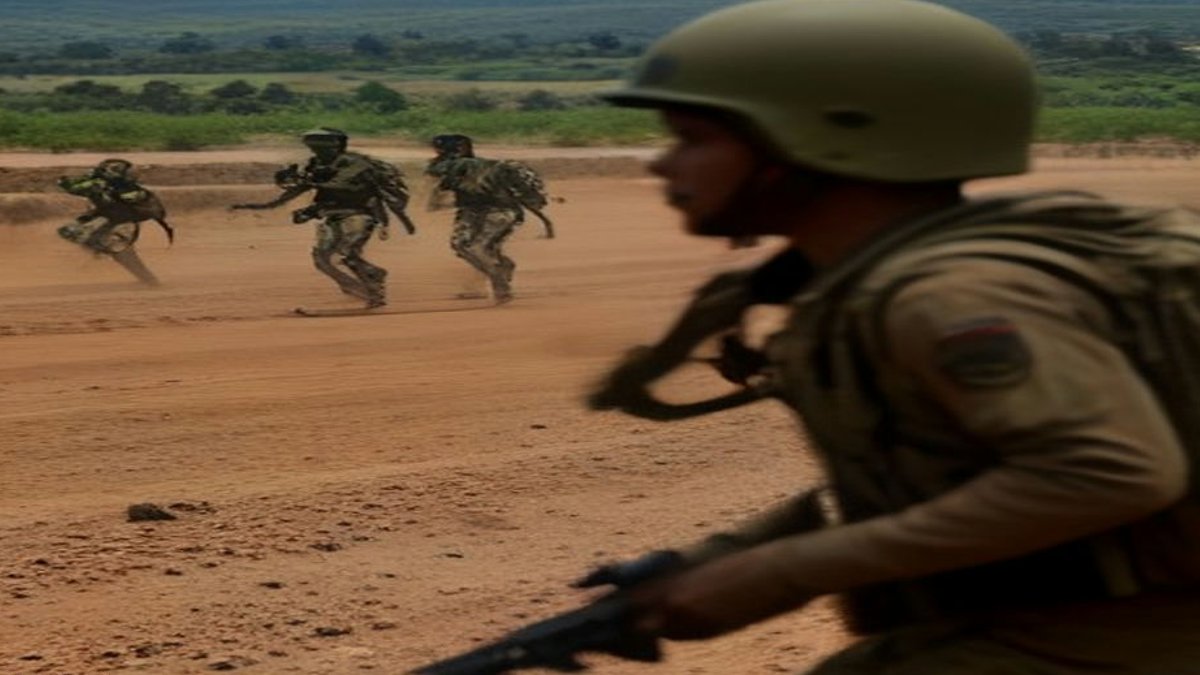
Ethiopia’s economic progress, marked by stronger growth and benefits from structural reforms, is under threat from renewed conflict with Eritrea, potentially disrupting Africa‘s most ambitious economic liberalisation programme.
Escalating tensions and regional instability
Fighting intensified in early September when the Tigray People’s Liberation Front (TPLF) joined forces with six other armed groups to overthrow Prime Minister Abiy Ahmed. By 23 September, the rebels seized three airports in Tigray and advanced into neighbouring Amhara and Afar regions. The offensive triggered a significant government counteroffensive. By 5 October, government-aligned forces had retaken the Tigrayan capital of Mekelle and installed an interim administration.
According to various accounts, Eritrean troops entered the Tigrayan city of Adigrat on October 7. WHO chief Tedros Adhanom Ghebreyesus called recent civilian assaults in Ethiopia’s Amhara and Tigray areas ‘profoundly alarming,’ warning that the violence risks overwhelming an already weakened healthcare system.
Since the 2020–22 war ended, relations between Ethiopia and Eritrea have soured as Prime Minister Abiy Ahmed seeks to regain control of the Red Sea port of Assab, which Ethiopia lost when Eritrea became independent in 1993. The Eritrean leadership in Asmara has since moved closer to the Tigray People’s Liberation Front (TPLF), prompting Ethiopia to accuse it of backing TPLF forces with money, weapons, and logistical aid.
The Oxford Initiative on Peace and Recovery in Ethiopia, based at the University of Oxford, argued that the conflict could cost around $125bn in lost GDP by 2027, compared with a counterfactual scenario in which Addis Ababa had continued on its pre-war trajectory. The group suggested Ethiopia’s economy would be 19% smaller in 2027 than it would be without a war.
The International Crisis Group issued a warning in late September about the risk of a broader regional war. Separately, the World Bank calculated that the last conflict inflicted $22.7 billion in physical destruction across six Ethiopian regions, with rebuilding costs estimated near $19.7 billion.
Immediate economic consequences and future outlook
The conflict has already begun to disrupt the provision of essential services and aid deliveries. This disruption is worsening already substantial humanitarian needs and displacement risks. Credit ratings agency Fitch Ratings noted that the renewed tensions raise the risks of a wider regional escalation. The agency forecasted that real GDP growth will ease to 7% in FY27, down from 9% in FY25. This projection reflects the impacts of the renewed conflict in Tigray and Amhara regions.
International financial institutions have expressed concern about the situation. The IMF wrote in July that a deterioration in the domestic security situation could renew economic disruption. The agency noted that intensifying spillovers from regional conflicts could pose downside risks to the outlook. This warning came as Ethiopia faced challenges from stubbornly high inflation, which remains around 15%. The IMF has projected Ethiopia’s GDP growth at 9.2% for 2026, making it one of the fastest-growing economies in sub-Saharan Africa.
Economic uncertainty has also affected foreign investment flows. The Ethiopian Investment Commission reported that the country attracted $4.32bn in foreign direct investment during the fiscal year 2025 to 2026. Ethiopia’s Institute of Foreign Affairs, a think-tank affiliated with the government, argued that it is important for the country to demonstrate commitment to the reform agenda even during difficult economic times.
While not mentioning the conflict directly, the organisation noted in October that “investors, creditors and trading partners ultimately assess whether policy changes are likely to remain consistent through periods of pressure as well as periods of growth. This is where what might be called the credibility premium becomes important: the additional confidence and capital that become available when international partners believe that a reform programme is sufficiently durable to withstand the inevitable pressures of a full economic cycle.
Estimates suggest the potential cost of the current conflict could be steep. The group also noted the impact of the 2020-2022 Tigray war on Ethiopia’s economic liberalisation agenda, highlighting challenges in accessing international resources and attracting foreign investment. The World Bank estimated that the previous conflict caused $22.7bn of physical damage across the six affected Ethiopian regions, with potential reconstruction costs calculated at around $19.7bn.





Leave a Reply