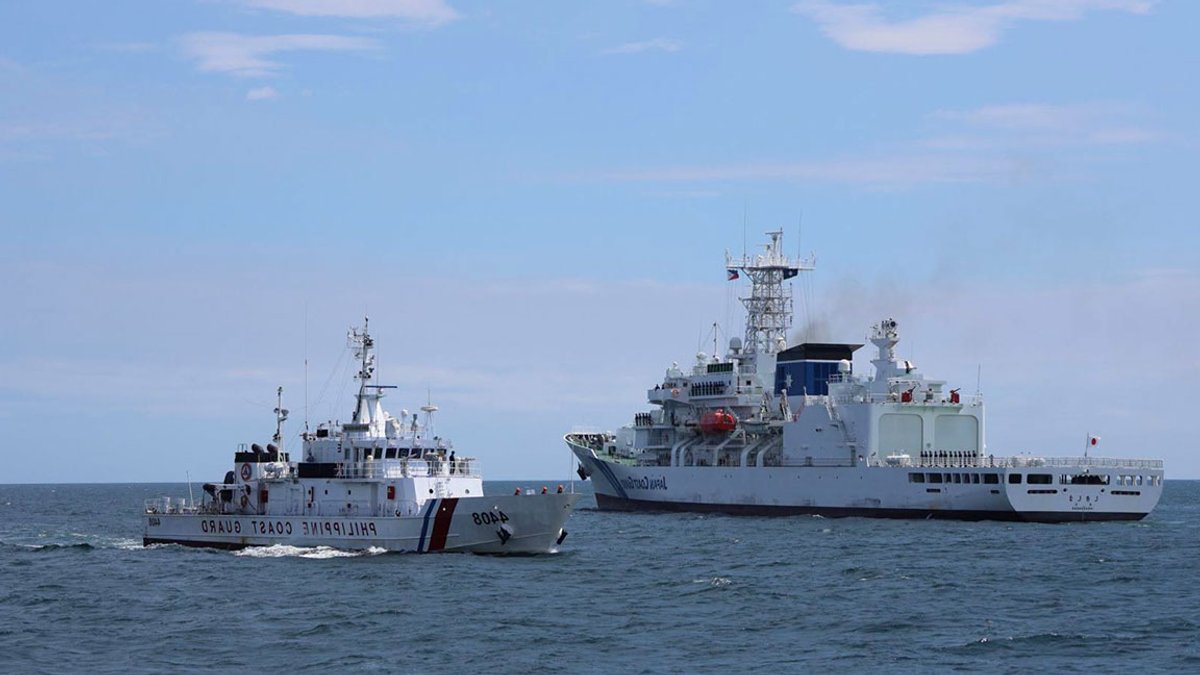
The US and its allies are rethinking defense priorities amid global pressures, placing the Philippines at a turning point in its security approach. A virtual roundtable organized by the Stratbase Institute and the Center for Naval Analyses gathered specialists to explore how Manila should balance Washington’s push for greater self-reliance with the continued need for US engagement in the region. The strain on US military resources, now evident in the joint Operation Epic Fury against Iran, has intensified these discussions, forcing the Philippines to reconsider its defense planning assumptions.
The alliance with the United States has been a bedrock of regional stability, but its future depends on mutual adaptation. Washington’s insistence that allies assume more responsibility while maintaining credible deterrence has created a critical juncture for Manila. The Philippines is already upgrading its military under the Full Archipelagic Defense Concept, yet turning these plans into operational strength remains the primary hurdle.
Undersecretary of War for Policy Elbridge Colby reinforced this during his August visit, stating that while the US expects allies to contribute more, Washington’s commitments—particularly in the First Island Chain—must remain clear as tensions in the West Philippine Sea intensify. Colby’s engagement with Stratbase in 2022 over his book, The Strategy of Denial, had already signaled this evolving dynamic, but his recent remarks made the shift explicit: the alliance’s sustainability depends on shared effort, not unilateral support.
Read Also: Philippines to Allow All Electricity Users to Choose Providers
Beyond weapons: Tech and influence threats
Modern security extends beyond military hardware to include semiconductors, artificial intelligence, and critical infrastructure. Vulnerabilities in these areas can erode sovereignty as effectively as direct military threats. Initiatives like the Luzon Economic Corridor (LEC) and Pax Silica address these risks by diversifying supply chains and attracting investment, but both are vulnerable to disinformation and foreign malign influence. The Philippines must take the lead in shaping the narrative around these projects, positioning them as engines for job creation, infrastructure development, and long-term stability. Without proactive communication, even well-designed programs risk being undermined by misinformation or political opposition.
The strain on US military resources, as demonstrated by Operation Epic Fury, has exposed the limits of assuming sustained American support. The campaign highlighted how competing global demands can delay or divert military readiness. For the Philippines, this means security planning must now account for what Washington can realistically provide when multiple crises overlap. This is not a sign of weakness in the alliance but a recognition of necessity: a stronger Philippine defense capability strengthens the alliance’s credibility. Trilateral cooperation with the US and Japan further enhances collective capacity, while economic resilience provides a sustainable foundation for both security and growth.
Turning strategy into real defense gains
The next phase will determine whether Manila can translate these strategies into concrete results. The focus must move from diplomatic discussions to measurable outcomes, improved maritime surveillance, shared intelligence networks, and the ability to sustain operations during conflicts. Without these developments, the alliance risks becoming a hollow framework. The Philippines can no longer serve merely as a host for allied forces; it must become an active partner, leveraging its geography, economic potential, and strategic interests to shape the alliance’s direction.
Read Also: Algeria bans urea exports to France amid tensions
The roundtable looked into how the Philippines could operationalize its defense modernization under the Full Archipelagic Defense Concept. Experts agreed that integration into a cohesive, sustainable force structure is essential. This requires expanding domestic shipbuilding and maintenance capabilities, which currently act as major bottlenecks.
Trilateral cooperation with the US and Japan emerged as a key solution to these challenges. The roundtable explored how joint exercises, such as the annual Balikatan drills, could evolve beyond symbolic deployments to include real-time intelligence-sharing, combined logistics planning, and prepositioned supplies for rapid response in the West Philippine Sea. However, participants stressed that meaningful progress depends on Manila specifying actionable requirements, such as shared sensor networks or joint patrol rotations, rather than relying on vague assurances.





Leave a Reply