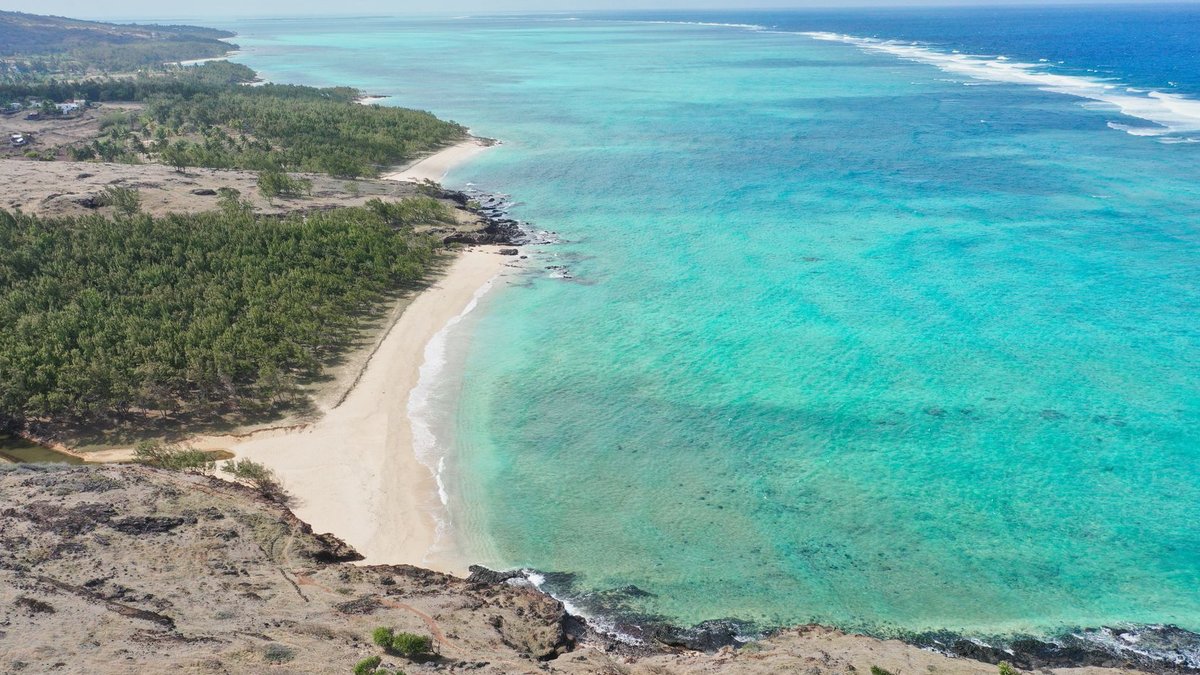
Mauritius sits in the Indian Ocean as a paradox: an island forged by volcanic upheaval millions of years ago, now shaped by human ambition, exploitation, and resilience. Olivier Hein’s Star and Key: The Historical Adventure of Mauritius traces this journey from geological birth to modern democracy, blending adventure with hard-won progress. The book avoids academic stiffness, instead letting the story unfold through vivid episodes—from the island’s volcanic origins to its role in global trade, slavery, and eventual independence.
The island’s creation began around 10 million years ago, when molten rock pushed through the ocean floor to form land. Early inhabitants were birds, including the ancestors of the dodo, blown in by winds from Madagascar. The first human visitors were likely Arab sailors, though they left no lasting trace. The Portuguese arrived in the 16th century, establishing a brief trading post, but it was the Dutch who saw Mauritius’s potential.
In 1595, Dutch captain Cornelis de Houtman claimed the island for the Vereenigde Oostindische Compagnie (VOC), the world’s first multinational corporation. By 1637, the VOC’s wealth—adjusted for inflation—would dwarf modern economies, making it the richest entity in history. Mauritius became a key outpost in the spice trade, but its real value lay in sugar. The Dutch planted cane, enslaved Malagasy workers, and built a garrison. Yet their rule lasted barely a decade. Hunger, cyclones, and the threat of pirates forced their retreat by 1710.
French Rule and Naval Ambition
The French filled the void, renaming the island Isle de France and transforming it. Governor Bertrand-François Mahé de La Bourdonnais (1735–1746) overhauled the port, expanded shipyards, and revitalized sugar production. His reforms turned Mauritius into a thriving colony, until political infighting in France cut his governorship short. The British seized the island in 1810 during the Napoleonic Wars, ruling until independence in 1968.
Slavery and indentured labor defined Mauritius’s early economy. The Dutch imported enslaved Malagasy workers; the French expanded sugar plantations with enslaved Africans. By the 19th century, indentured laborers from India arrived in droves, reshaping the population. Today, 68% of Mauritians are of Indian descent, with significant Creole, Chinese, and European minorities. The island’s currency even honors its diverse history: banknotes feature figures like Moilin Jean Ah-Chuen, a Sino-Mauritian businessman, and Renganaden Seeneevassen, a London-educated politician who attended Queen Elizabeth II’s coronation.
Related Post: China’s Battery Dominance Challenges India’s Security and Trade
Mauritius’s post-independence struggle mirrored its colonial past. The sugar industry collapsed by the 1970s, leaving high unemployment and brain drain. Writer V.S. Naipaul famously called it an “overcrowded barracoon” in an essay of the same name. But the island pivoted. It became a financial hub and tourist destination, attracting wealthy visitors with its beaches and luxury resorts. Yet this year, protests erupted over water shortages and rising costs, the first major demonstrations since 1999. After centuries of upheaval, Mauritius remains restless.
The island’s transformation under French rule extended beyond economics. La Bourdonnais’s reforms included the construction of a fortified port at Port Louis, which became a critical naval base. The French also introduced new agricultural techniques, such as crop rotation, to sustain sugar production. Yet their rule was not without conflict. The island’s strategic location made it a target during the Napoleonic Wars, culminating in its capture by British forces in 1810.
British Colonialism and Labor’s New Faces
British rule brought further changes, including the abolition of slavery in 1835. The end of slavery disrupted the labor force, prompting the British to recruit indentured workers from India, China, and Madagascar. By the late 19th century, Indian laborers made up the majority of the population, shaping Mauritius’s cultural and linguistic identity. The British also developed infrastructure, such as railways and roads, to support the sugar economy. However, economic dependence on sugar left the island vulnerable. When global sugar prices collapsed in the 1970s, unemployment surged, and many skilled workers emigrated, worsening the economic strain.
Despite these challenges, Mauritius adapted. The government diversified the economy, investing in finance, textiles, and tourism. By the 1990s, the island had established itself as a regional financial hub, attracting offshore banking and investment. Tourism also flourished, with luxury resorts drawing visitors from Europe, Asia, and the Middle East. Yet recent years have tested this stability. Protests in 2023 reflected growing dissatisfaction with water shortages, inflation, and perceived government failures. The demonstrations marked the first major unrest since 1999, signaling persistent social tensions.
Currency, Protests, and an Unfinished Legacy
The island’s banknotes reflect its layered history. Beyond Moilin Jean Ah-Chuen and Renganaden Seeneevassen, the 500-rupee note honors Sookdeo Bissoondoyal, a key figure in the independence movement. Bissoondoyal’s activism in the 1950s and 1960s helped secure Mauritius’s sovereignty from Britain. His inclusion on currency shows the island’s post-colonial achievements, even as economic and environmental pressures persist. The protests of 2023 highlighted that Mauritius’s journey, from volcanic origins to modern democracy, remains unfinished.




Leave a Reply