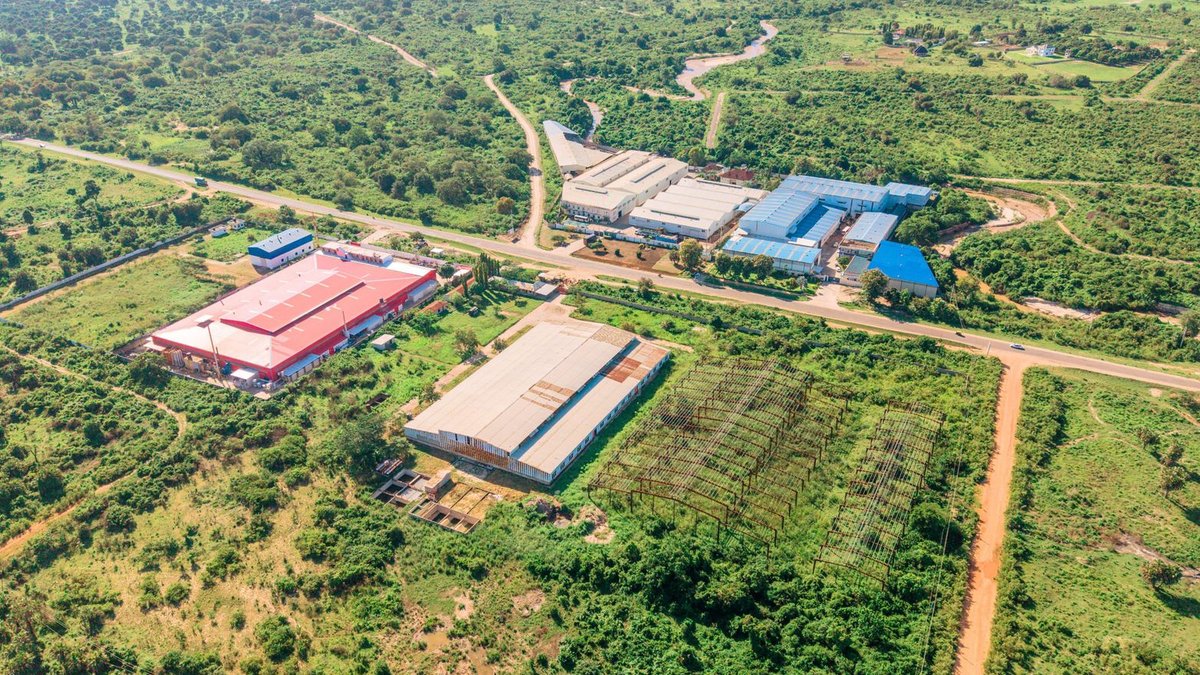
Construction began on Ethiopia’s Hawassa Industrial Park in July 2015, about 280 miles south of Addis Ababa. The $250 million project is now the largest textile industrial park in Africa and a key part of the government’s plan to industrialize the economy and draw foreign investment.
China’s special economic zones as a blueprint
The park follows a model China introduced in the 1980s when it created special economic zones to open its economy. Shenzhen, the most famous example, grew from a small town into a global manufacturing center. These zones provided tax breaks, cheaper land, and lighter regulation while shifting decision-making from Beijing to local governments to speed up infrastructure and approvals.
Ethiopia has since built 22 industrial parks using the same approach. A study from Peking University describes them as “geographically delimited zones with serviced land, power, regulatory incentives, and streamlined administration, designed to create local pockets of competitiveness that attract firms, especially foreign investors.”
Textiles and untapped cotton potential
The strategy focuses on Ethiopia’s textiles sector, particularly cotton. The country has over three million hectares of land suitable for cotton cultivation, but less than 3% of that potential is used. This makes Ethiopia one of the world’s largest untapped cotton sources, according to the United Nations Development Program. About 85% of production in Ethiopia’s industrial parks consists of textiles and garments.
Related: Buyer Secures Dream Home Not Listed for Sale
Tsegaye Abebe, executive director of the Ethiopian Cotton Association, says the parks have made a strong start. “The investment in industrial parks like Hawassa and Bole Lemi was the right strategic decision and has laid a critical foundation,” he says. “Ethiopia now has modern infrastructure that has attracted over 300 investors. The parks have created significant employment, with tens of thousands of jobs, mostly for young women entering formal work for the first time. Hawassa Industrial Park alone employed over 35,000 workers at its peak.”
A Peking University study found the parks have particularly helped women. “Because Ethiopia’s parks concentrate in labor-intensive sectors that traditionally employ women, the arrival of a park sharply raises female non-agricultural employment while leaving male employment largely unchanged,” the authors write. In 2019, 86% of workers in Hawassa, 89% in Bole-Lemi, and 96% in Adama were women.
War and global shocks disrupt progress
That growth has stalled. The Covid-19 pandemic reduced demand for apparel and textiles by about 20%, and local spending shifted toward essential goods.
The UNDP states the suspension of Ethiopia from the African Growth and Opportunity Act “has constrained production and exports for foreign firms in the industrial parks, prompting some to relocate.” Most of these firms are Asian-owned, so the impact was less severe than it could have been. Still, the war in Ukraine and later disruptions in the Red Sea added pressure by increasing costs for imported raw materials and shipping.
Related: Protecting Your Assets: A Practical Approach to Insurance in North Dakota
Tsegaye describes the situation as complex. “Global supply chain disruptions, from Covid-19 to Red Sea shipping challenges, have strained a system dependent on imported materials and overseas buyers,” he says. “Manufacturers struggled to import raw materials and spare parts, forcing adjustments across the industry.”
Ethiopia’s own cotton remains largely unused. Garment producers still depend on imported thread and other materials, partly because local cotton doesn’t work well with foreign machinery. Tsegaye explains that local varieties can slow machines and cause losses of about $164,000 for every 100 tonnes processed. “We must urgently address these upstream constraints,” he says. “Investing in our cotton value chain through better seeds, irrigation, and farmer training is essential. We cannot build a textile industry on imported fiber.”
Fixing the supply chain
Beyond weathering global shocks, Ethiopia needs to improve its business environment. Tsegaye lists priorities: reducing logistical bottlenecks, simplifying customs, ensuring reliable utilities, and stabilizing the economy. He also stresses the need for better workforce training. “Low wages aren’t a sustainable advantage if they come with low productivity,” he says. “We must train workers to operate modern machinery and meet international quality standards.”
The Hawassa Industrial Park stands as both a symbol of progress and a reminder of the challenges ahead. Its success depends not just on attracting investors but on improving local cotton production and managing a difficult global market.



Leave a Reply