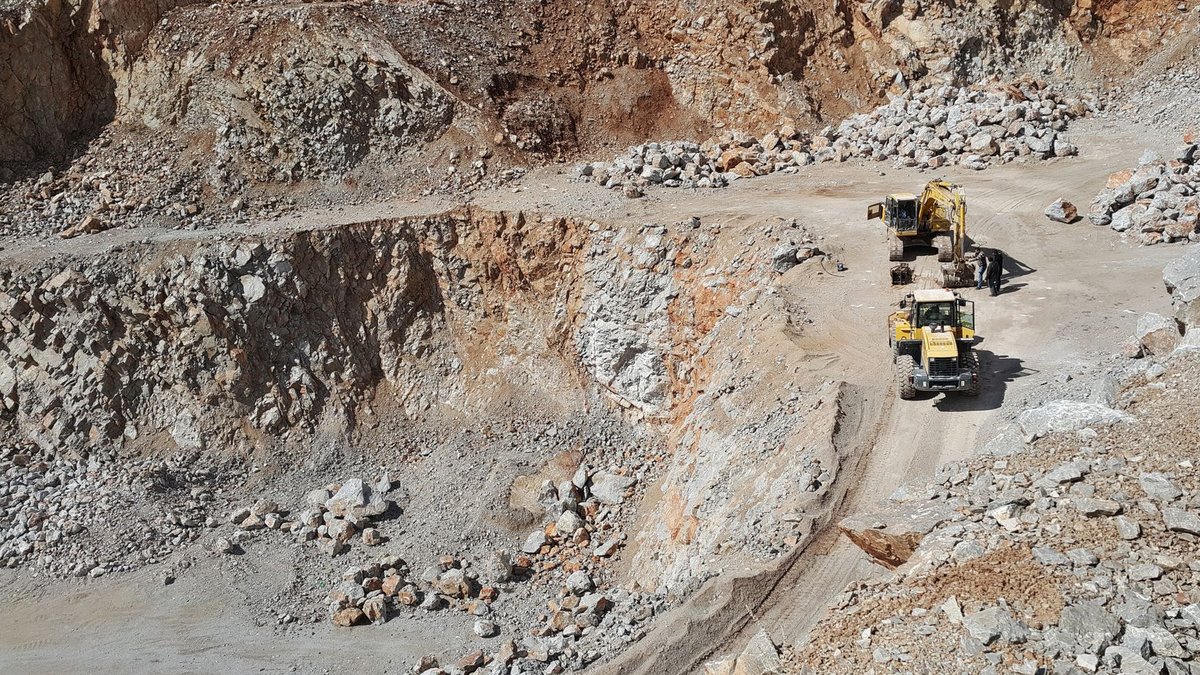
Namibia’s recent deals with China have intensified competition between Beijing, Brussels, and Windhoek over critical minerals and green industrial projects. These agreements may increase Namibia’s influence or reinforce its dependence on extraction, even if framed as sustainable development.
Nine agreements, one strategic gamble
During President Netumbo Nandi-Ndaitwah’s state visit to Beijing, Namibia and China finalized nine cooperation agreements covering energy, mining, infrastructure, and agriculture. The package includes an economic partnership for shared development, a green minerals agreement, and technical and vocational education and training (TVET) and human resource development. Both countries identify uranium, lithium and rare earths, alongside local processing and technology transfer, as strategic priorities.
China’s new critical minerals law aims to secure stable access to strategic resources while tightening control over exports and outbound investment. Although it is a domestic law, its effects extend beyond China’s borders by encouraging long-term offtake agreements, joint ventures and infrastructure-for-resources arrangements in producer countries such as Namibia. The green minerals agreement could therefore draw Namibia’s uranium, lithium and rare earths more deeply into Chinese-centred value chains at a time when Western buyers are seeking to diversify their supply chains.
Related: EBID backs G Farms expansion plan
Europe’s competing vision
Namibia is not relying solely on China. Since 2022, the European Union has positioned itself as a key partner for green hydrogen and critical minerals, offering roughly €1.3bn in loans and grants through its Global Gateway initiative. The EU has also commissioned consultants to help draft Namibia’s critical minerals strategy, describing the relationship as a partnership focused on beneficiation and quality jobs.
Namibia already exports agricultural products and beneficiated minerals to the EU under the SADC-EU Economic Partnership Agreement, trade estimated to support more than 46,000 jobs. China’s new agreements both reinforce and test Namibia’s partnership with the EU. If Windhoek maintains a coherent regulatory framework, competition between the two blocs to finance hydrogen, mining and logistics projects could strengthen Namibia’s bargaining position. Without that coherence, however, competing demands for access to the same minerals, ports and transmission infrastructure could lead to fragmented standards and project-by-project exemptions.
Infrastructure as a test case
The agreements reveal a key tension: infrastructure built for export versus infrastructure that benefits Namibia’s economy. Chinese capital and engineering expertise could accelerate investment in backbone infrastructure, including grid upgrades, ports and smart-city projects that green hydrogen developers and European investors also need.
Related: US tech trust to outpace China’s AI appeal
Skills training presents another opportunity. Technical and vocational education and training (TVET) and human resource development could work under a national strategy. Without alignment, Namibia risks a fragmented system of foreign-funded initiatives.
The true challenge is whether Namibia can use competing interests to enforce consistent rules: local processing before export, technology transfer, and community protections. Success could turn today’s mineral competition into a foundation for a diversified economy. Failure might repeat a familiar pattern—extractive deals that leave little behind once resources are depleted.
The green minerals agreement giv




Leave a Reply